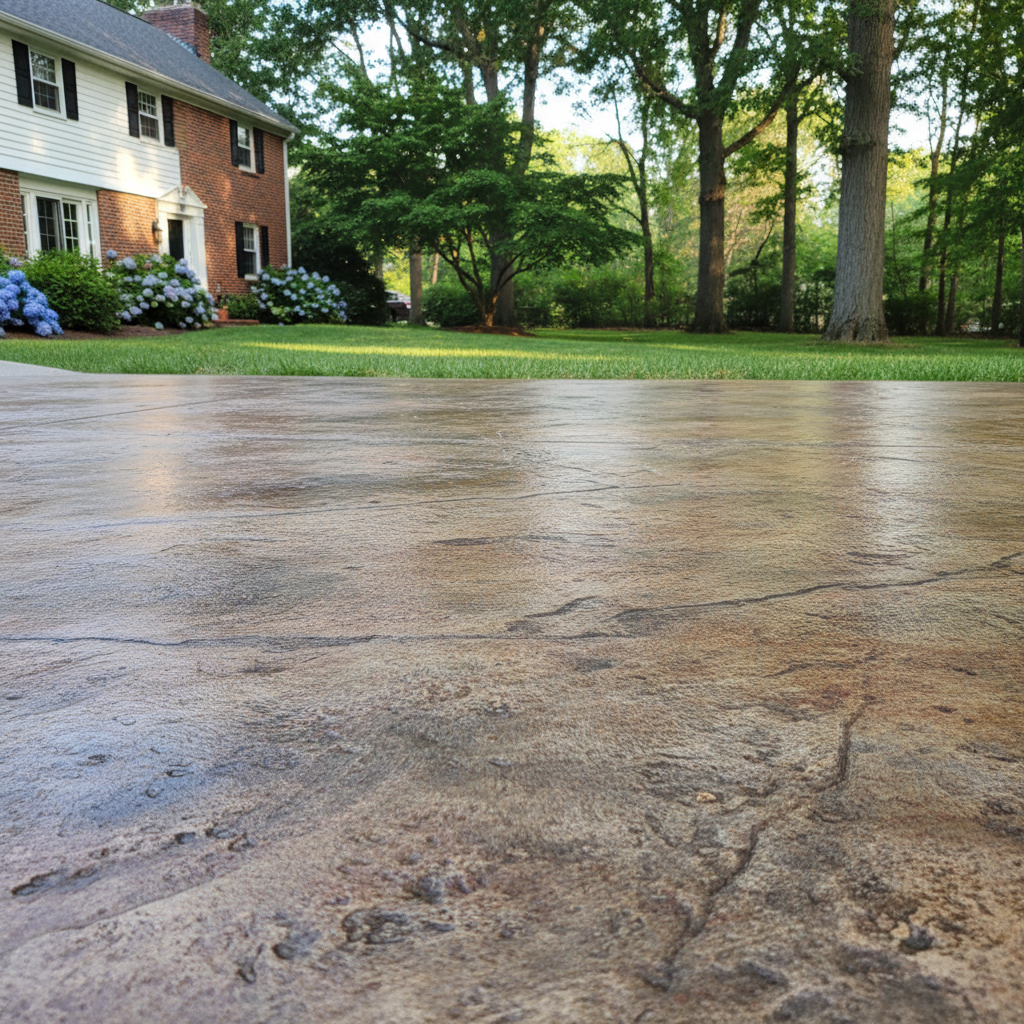
So, you're staring at that plain old concrete slab, huh? And you're probably thinking, "There's got to be something better." Good news: you're right! Concrete staining can completely change how a space looks and feels, whether it's a basement floor, a garage, or even that patio out back. But before you grab a bucket of stain, let's chat a bit about what's involved and when it might make sense to call in someone like us at Neighborly Concrete Inc.
Before You Even Think About Staining
First things first, you've got to check out your concrete. This is probably the most important step, and honestly, if you skip it, you're just asking for trouble. So, what kind of shape is your concrete actually in?
- Is it clean? I mean, really clean. Any dirt, grease, paint, or old sealer will stop the stain from soaking in correctly. Outside, you'll need a pressure washer. Inside, a good scrub with a degreaser is absolutely essential.
- Is it sealed? If your concrete already has a sealer on it, you'll have to strip it off. Stains just don't work well over sealers. This can be a real pain, often needing chemical strippers and a whole lot of scrubbing.
- Are there cracks or spalling? Stains make imperfections stand out; they don't hide them. If you've got big cracks, divots, or spots where the surface is flaking off (we call that spalling), you'll need to fix those first. For tiny hairline cracks, you might get away with it, but anything bigger will show right through the stain. And honestly, if there's a lot of spalling – which we see a lot in older Brookline homes where concrete has gone through many freeze-thaw cycles – you might be better off with an overlay or even replacing the concrete entirely.
- What's the porosity like? This affects how well the stain takes. Older, more porous concrete will absorb stain differently than newer, denser concrete. You can do a quick water test: pour a little water on a spot that's not too noticeable. If it beads up, you either have a sealer or a very dense surface. If it soaks right in, it's porous.
If your concrete looks rough, or if it has a stubborn sealer, that's usually the first hint that you might want to call a pro. Stripping and fixing concrete the right way takes special tools and a lot of know-how.
Choosing Your Stain: Acid vs. Water-Based
You'll generally run into two main kinds of concrete stain:
- Acid Stains: These aren't like paint at all. They react chemically with the minerals in the concrete, creating a mottled, translucent, and truly unique look. Think earthy colors – browns, greens, blues. No two acid-stained floors will ever look exactly the same, which is part of why people love them. The downside? Your color choices are limited, and that chemical reaction can be pretty unpredictable. You also have to neutralize the acid after you apply it.
- Water-Based Stains: These are more like a translucent paint. They sit on the surface and don't react chemically. You get a much wider range of colors with these, and the results are usually more consistent. They're easier to put on and don't need neutralizing. The downside is they can sometimes look a little less natural than acid stains, and they might not soak in as deeply.
For a DIY project, water-based stains are generally more forgiving. Acid stains need a more careful application, and dealing with the acid and the neutralization process can be tricky if you're not used to it. I've seen plenty of DIY acid stain jobs go south because people didn't neutralize correctly or just didn't understand the reaction.
The Staining Process: What to Expect
Okay, let's say you've got a clean, unsealed, and pretty solid concrete slab. You've picked out your water-based stain. Here's a quick rundown:
- Clean Again: Seriously, you can't clean too much. Vacuum, mop, then let it dry completely.
- Protect Everything: Stain gets everywhere, trust me. Tape off walls, cover anything you don't want stained. This is especially true for inside jobs – that stain mist travels!
- Apply the Stain: Use a pump sprayer for an even application. Don't just dump it on. Put it on in thin, even coats. Overlapping is fine, but try to keep it consistent. If you were using acid stains, you'd use a plastic sprayer and let it react for several hours.
- Let it Dry: Follow the manufacturer's directions for how long to let it dry between coats.
- Neutralize (for Acid Stains Only): If you used acid stain, you'll need to wash the surface with an ammonia and water solution or a special neutralizing product. This stops the chemical reaction.
- Rinse and Clean: Once the stain is dry (or neutralized), you'll need to rinse off any leftover residue. This can create a lot of dirty water, so plan for how you'll get rid of it.
- Seal It: This step is non-negotiable. A good quality sealer protects your stain from wear, spills, and UV rays. It also really makes the color pop. You'll usually need two coats of a good acrylic or polyurethane sealer.
This whole process takes time. You're looking at multiple days, especially with all the drying times between coats and sealing. Don't rush it. I've seen too many people try to speed things up, and it never ends well.
When to Call Neighborly Concrete Inc.
Look, I'm all for homeowners tackling projects they can handle. It's incredibly satisfying. But there are definitely times when calling a professional is just the smarter move:
- Extensive Concrete Repair: If your concrete has deep cracks, a lot of spalling, or uneven surfaces, we can handle the repairs correctly before staining. Trying to patch and then stain usually leads to patchy, inconsistent color.
- Large or Complex Areas: A small basement bathroom? Maybe. But a huge garage or a complex, multi-level patio? That's a ton of surface area to clean, prep, and stain evenly. It's easy to get streaks or inconsistent color on big jobs if you don't have experience.
- Existing Sealers or Coatings: Stripping old sealers or epoxy coatings is a messy, labor-intensive job that often needs special equipment.
- Acid Staining for Specific Effects: If you're really set on the unique look of acid stain, but you're nervous about the chemicals or how unpredictable it can be, we've got the experience to manage it.
- You Just Don't Have the Time or Patience: This isn't a quick weekend afternoon project. It's a multi-day commitment, and if you cut corners, well, it shows.
We've done a lot of concrete staining jobs right here in Brookline, from the old triple-deckers in Coolidge Corner to the newer builds near Chestnut Hill. We know what works with our local climate and soil conditions, and we've got the tools and expertise to get it done right. If you're unsure, just give us a call. We're happy to talk through your project and give you an honest assessment of whether it's a good DIY candidate or if you'd be better off letting us handle it.