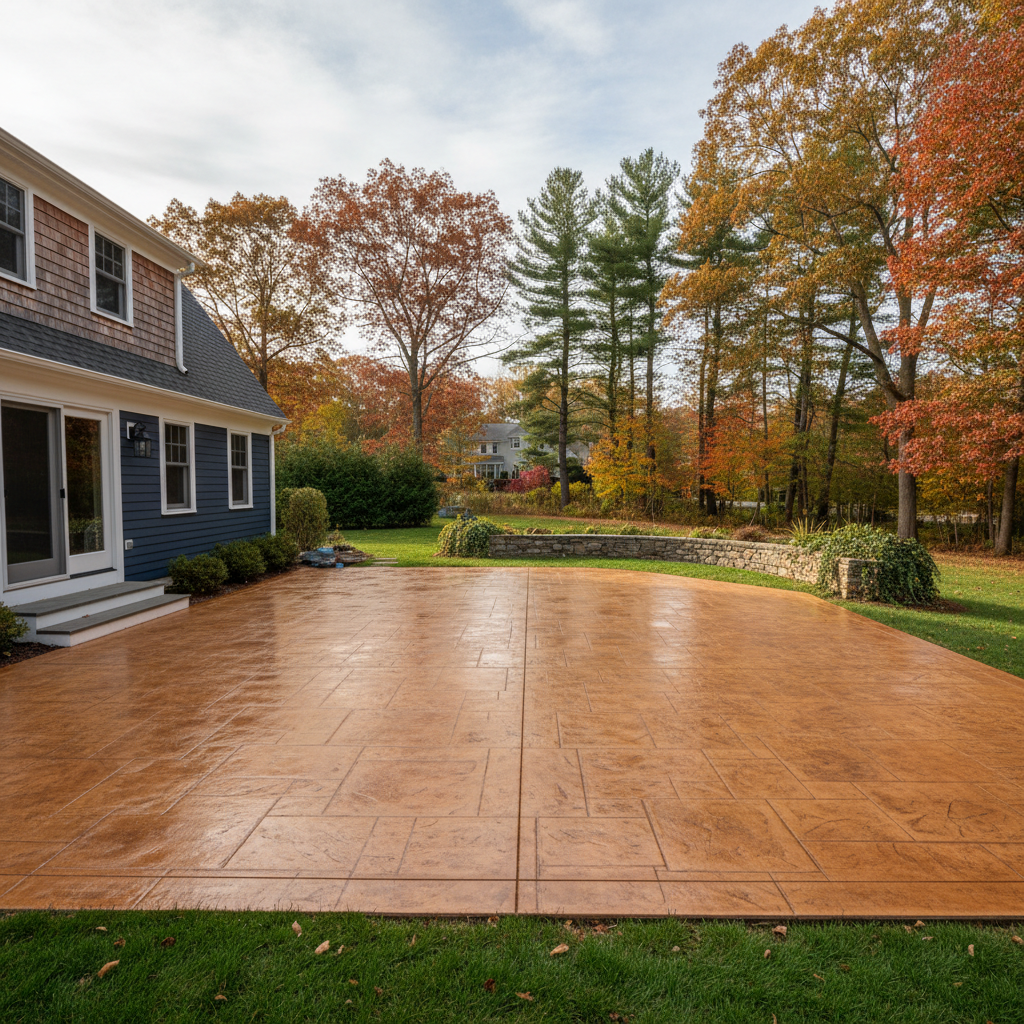
So, you've got some gorgeous stained concrete, maybe it's your patio, a walkway, or even an indoor floor. It looks fantastic, right? That rich color and unique finish really add something special to a home. But here's the deal: it's not a 'set it and forget it' kind of thing, especially not around here in Brookline. Our New England climate, with its brutal winters and humid summers, can be tough on just about anything outdoors, and stained concrete is no exception. You want that investment to last, and I want to tell you how to make that happen.
Extending the Life of Your Stained Concrete
The biggest thing you can do to protect your stained concrete is proper sealing. When I or another reputable contractor finishes a staining job, we always apply a high-quality sealer. This isn't just for shine; it's your concrete's first line of defense against moisture, UV rays, and general wear and tear. Think of it like a clear coat on your car – it protects the paint underneath. Over time, this sealer will wear down, especially in high-traffic areas or spots exposed to direct sunlight and harsh weather. For most outdoor applications, I'd recommend having it re-sealed every 2-3 years. Indoor concrete might go longer, maybe 4-5 years, depending on traffic. Don't wait until it looks dull or chalky; by then, you're already losing protection. A good re-seal will bring back that luster and keep the stain vibrant.
Another big one is protecting it from chemicals. Things like de-icers in the winter are a huge no-no for stained concrete, especially those containing rock salt or ammonium nitrates. They can eat right through your sealer and even damage the concrete itself, causing spalling or discoloration. Stick to sand for traction or use pet-safe, concrete-friendly alternatives if you absolutely need to melt ice. Also, be careful with fertilizers, strong cleaning agents, or even spilled automotive fluids. Clean up spills quickly; don't let them sit and soak in.
Regular Maintenance: What You Need to Do
Keeping your stained concrete clean is probably the easiest and most effective maintenance step you can take. For outdoor surfaces, a simple sweep to remove leaves, dirt, and debris is a great start. Then, a good rinse with a garden hose is usually all you need. For tougher grime, you can use a mild detergent – something like dish soap mixed with water – and a soft-bristle brush. Scrub gently, then rinse thoroughly. Avoid pressure washers set to high pressure, especially on older or more delicate concrete, as they can strip the sealer or even etch the surface if you're not careful. If you do use one, keep the nozzle moving and use a wide spray pattern.
For indoor stained concrete, regular sweeping or vacuuming is key to prevent abrasive dirt from scratching the surface. Mop with a pH-neutral cleaner. Again, avoid harsh chemicals or abrasive scrubbers. A good doormat at entryways helps a lot, too, catching dirt before it gets tracked across your beautiful floor.
Warning Signs You Shouldn't Ignore
Your stained concrete will tell you when it needs attention if you know what to look for. Here are a few red flags:
- Dullness or Fading: If the color isn't as vibrant as it used to be, or if it looks chalky, your sealer is likely wearing thin. This is the most common sign it's time for a re-seal.
- Water Penetration: When you spill water on properly sealed concrete, it should bead up. If it soaks in and darkens the concrete, that sealer is gone, and your concrete is vulnerable.
- Cracking or Spalling: Small hairline cracks are sometimes unavoidable, especially with our freeze-thaw cycles here in Massachusetts. But if you see larger cracks, or if pieces of the concrete surface are flaking off (that's spalling), you've got a bigger issue. This often indicates water penetration and freeze-thaw damage.
- Discoloration or Stains: Persistent dark spots, white powdery residue (efflorescence), or uneven color that wasn't there originally can mean moisture problems, chemical exposure, or sealer failure.
When to Call a Professional
Look, I'm all for homeowners tackling DIY projects, but some things are best left to the pros. If you see significant cracking, spalling, or if the concrete itself seems to be deteriorating, don't try to patch it yourself. Repairing concrete, especially stained concrete where you want to match the finish, takes specialized knowledge and materials. You could end up making it look worse or creating a bigger problem down the line. That's when you call someone like me at Neighborly Concrete Inc.
Also, if you're unsure about what kind of sealer to use for a re-application, or if you're dealing with stubborn stains you can't remove, give us a call. We've got the right tools, the right products, and the experience to assess the situation and recommend the best course of action. Sometimes, a professional deep clean and re-seal is all it takes to bring your stained concrete back to life. It's about protecting your investment and keeping your property looking its best, even after years of Brookline weather.