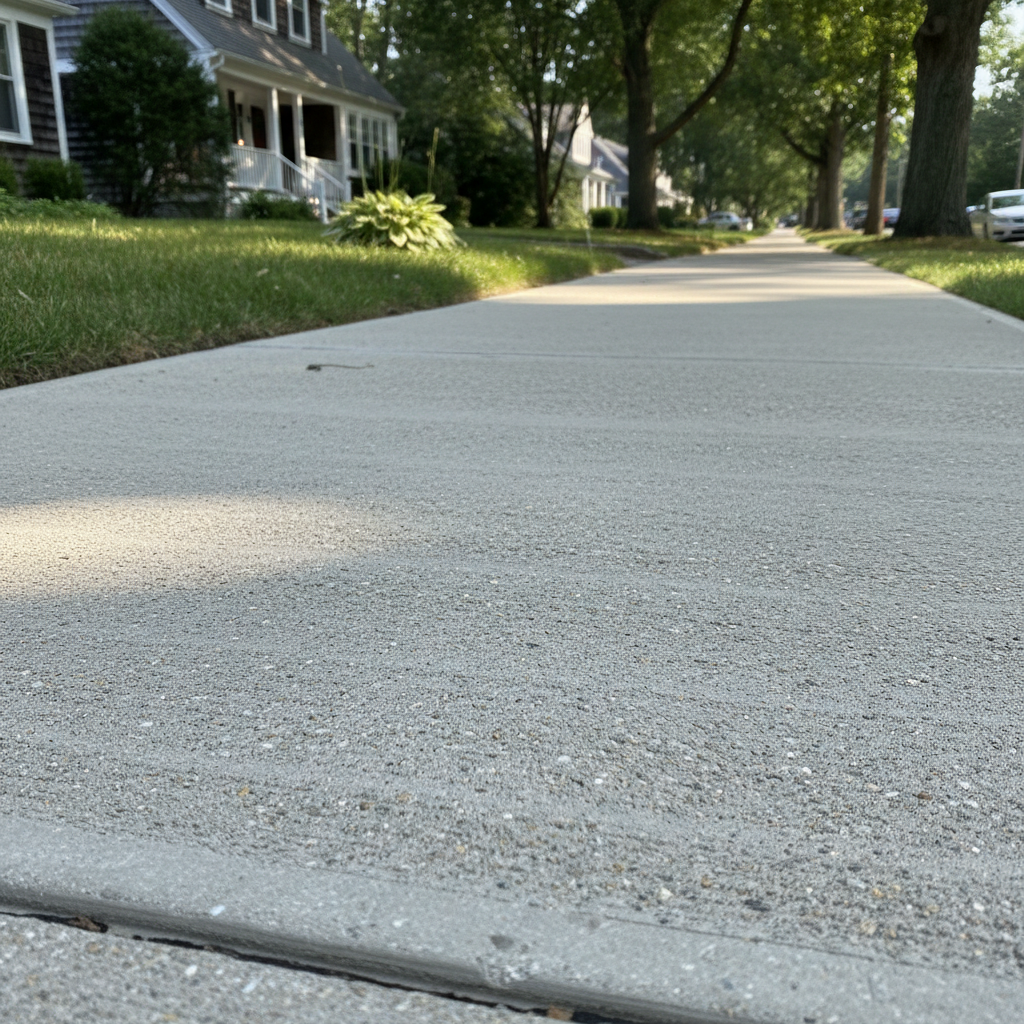
Most property owners do not spend much time thinking about their sidewalk until someone trips on a jagged edge or the town leaves a notice in the mailbox. Working around historic neighborhoods like Coolidge Corner or Chestnut Hill means dealing with specific municipal rules, freezing New England winters, and century-old maple roots that love to heave flatwork. Here is the straight talk on what you actually need to know about keeping your concrete sidewalk solid and compliant in Brookline.
Who actually owns the sidewalk in front of my house?
This is a very common question for our team, and the answer surprises many homeowners. Even though that patch of concrete is right outside your front door and you are legally responsible for shoveling the snow off it, the strip of land and the sidewalk itself usually sit within the town right-of-way. The Brookline Engineering Division handles public way regulations, meaning you cannot just tear out a cracked slab whenever you want. You need to know where your property line ends and the town turf begins before any demolition work starts.
Do I need a town permit to fix a cracked sidewalk slab?
Yes, if you are touching anything in the public right-of-way, a permit is required. At Neighborly Concrete Inc, we pull the necessary permits through the Town of Brookline so everything stays above board. If you try to bypass the town and pour concrete without a permit, you risk getting shut down mid-job or facing fines. Plus, the town has specific guidelines regarding sidewalk grades, ADA compliance slopes, and thickness requirements that a DIY fix or an unlicensed crew will likely get wrong.
Why does concrete crack and heave so fast around here?
The local soil and weather are the main causes. Brookline has plenty of heavy clay and glacial till that holds moisture like a sponge. When temperatures drop below freezing, that trapped water expands, pushing the earth upward and cracking rigid concrete slabs. Add in mature street trees dropping roots underneath your panels, and you have a recipe for uneven trip hazards every few winters. De-icing salts also eat away at the surface paste, pitting the concrete and letting more water soak in for the next freeze-thaw cycle.
Can I just grind down a raised lip instead of replacing the whole slab?
Sometimes, yes. If a panel has only shifted slightly and the concrete is still structurally sound, a mechanical saw grind can knock down a half-inch trip hazard in minutes and save you some cash. But if the slab is heavily fractured, sinking into a void, or crumbling from salt damage, grinding is just a temporary fix for a broken bone. A full tear-out and pour is the only permanent fix when the base material has washed away.
How long do I have to keep people off a fresh sidewalk pour?
Do not let neighborhood pedestrians or pets anywhere near the fresh pour for at least 24 to 48 hours for foot traffic. If Neighborly Concrete Inc pours a full residential sidewalk, you are looking at about 5 to 7 days before it reaches enough compressive strength to handle heavy loads, though concrete actually continues curing and hardening for months. We always tape off our jobs thoroughly because people on an evening walk will inevitably try to test the finish if you do not block it off.
Taking care of your frontage does not have to be a headache. If you have a slab that is giving you trouble or you just received a warning letter from the town, reach out to Neighborly Concrete Inc for sidewalk repair and concrete services in Brookline, Massachusetts.