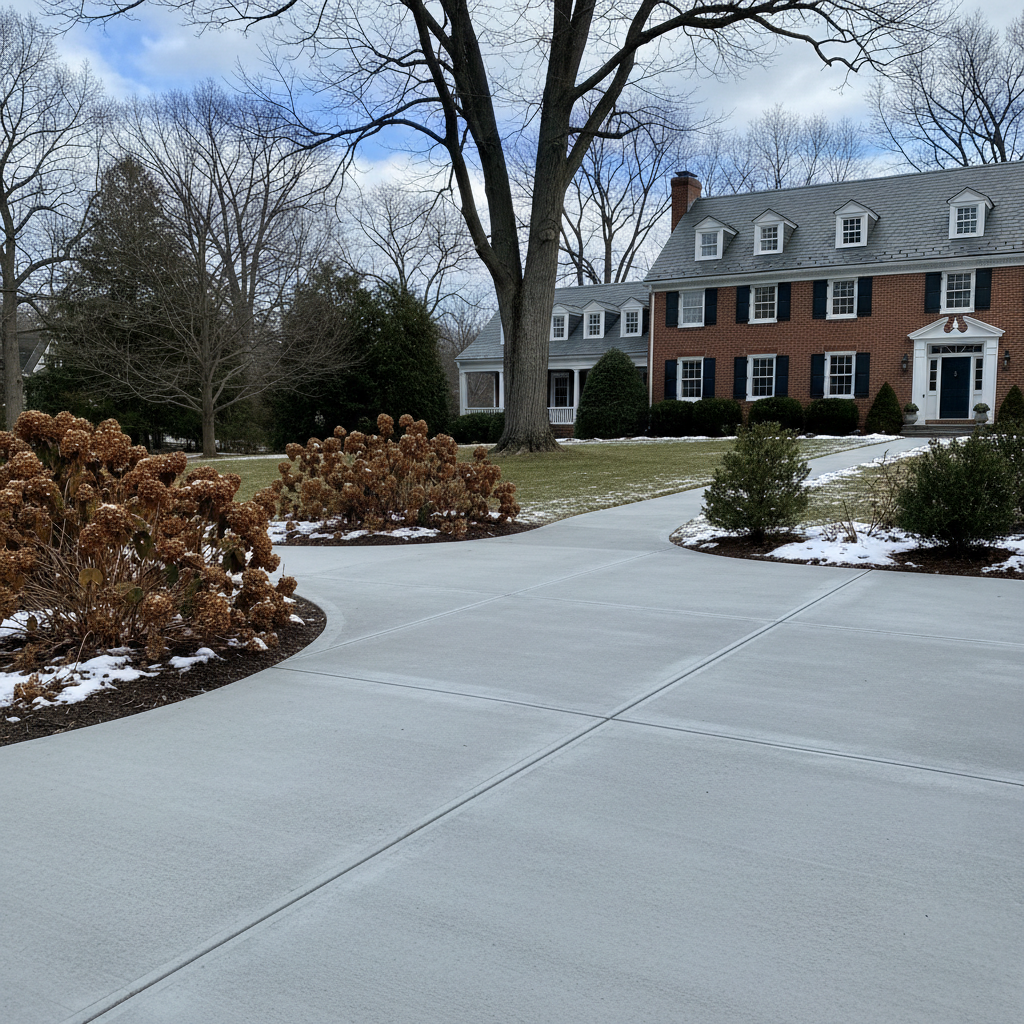
When's the best time to finally get that cracked walkway or crumbling step fixed around your Brookline home? Honestly, it's a question I hear a lot, and for good reason. Our New England weather isn't exactly kind to concrete, and timing really does matter if you want a repair that actually holds up.
Understanding How Our Local Climate Messes with Concrete
Here in Brookline, we've got a pretty brutal freeze-thaw cycle. You know it, I know it. One day it's 40 degrees and raining, the next it's 20 and sunny. That constant expansion and contraction — especially when water sneaks into small cracks and then freezes — is concrete's absolute worst enemy. It's what turns a tiny hairline fracture into a big, ugly spall or, even worse, a dangerous trip hazard.
Beyond the freeze-thaw, we also deal with significant temperature swings all year long. A scorching summer day can bake concrete, making it expand, while a cold winter night makes it shrink. This constant movement, combined with moisture, is why concrete repair isn't just about slapping on a patch; it's about really understanding the forces at play.
When to Schedule Concrete Repair: Timing Really Is Everything
So, when should you pick up the phone and call someone like me to get those repairs done? Generally, I tell folks to aim for the shoulder seasons.
- Spring (Late April to Early June): This is a fantastic window. The ground has usually thawed out completely by then, and we're typically past the worst of those freezing nights. Temperatures stay consistently above freezing, which is super important for concrete to cure right. It's warm enough for the materials to set and strengthen without the risk of an unexpected hard freeze damaging the fresh work. Plus, you get it done before the really hot, humid days of summer kick in.
- Fall (September to Mid-November): Another prime time. The intense summer heat has passed, and we're usually still enjoying mild, dry days. This makes for excellent curing conditions. You definitely want to get repairs done well before the ground starts freezing solid, which usually happens by late November or early December around here. If you wait too long, you're looking at pushing the job off until spring, and that small crack might just get a whole lot worse over the winter.
What about summer and winter? Can we do repairs then?
- Summer: Sure, we can, but it's trickier. Really hot temperatures can make concrete dry too quickly, which leads to shrinkage cracks or a weaker finish. We have to take extra precautions, like adding retarders to the mix or covering the concrete to slow down evaporation. It's doable, but it's not ideal for bigger projects.
- Winter: Generally, I try to avoid major concrete repairs in winter. Pouring concrete in freezing temperatures is a big no-no unless you're taking extreme measures like heating the aggregates and using special admixtures. That drives up the cost significantly and isn't usually practical for residential repairs. The concrete just won't cure properly, and you'll end up with a weak, easily damaged surface. Small, non-structural patch jobs might be possible on a mild day, but let's be honest, that's a temporary fix at best.
Weather Conditions That Really Affect the Work
Beyond the season, daily weather plays a huge role. Here's what we're looking for:
- Temperature: Ideally, we want temperatures consistently above 40°F (4°C) for at least 24-48 hours after the pour. The warmer it is, the faster the concrete gains strength, but not so hot that it dries too fast.
- Moisture: Dry conditions are best for pouring and finishing. Rain can wash away the cement paste, weaken the surface, and cause an unsightly finish. If rain is in the forecast, we'll reschedule. However, once the concrete is placed, it needs to be kept moist for proper curing, usually by covering it or periodically misting it, especially in dry, warm weather.
- Wind: High winds can accelerate surface drying, which can lead to cracking. On windy days, we might need to use windbreaks or apply curing compounds more quickly.
One thing I've seen often, especially in older Brookline neighborhoods like Coolidge Corner, is how the shade from mature trees or proximity to large, uninsulated basements can keep the ground colder for longer in spring. This means we sometimes have to wait a bit longer for the ground to warm up enough before starting a repair, even if the air temperature feels fine.
Protecting Your Concrete Investment Year-Round
Getting the repair done right is only half the battle. You've got to protect that investment. Here's how:
- Seal It: Once your concrete has fully cured (usually 28 days), apply a high-quality penetrating sealer. This is probably the single best thing you can do. It repels water, resists stains, and significantly reduces the impact of that freeze-thaw cycle we talked about. You'll want to reapply it every few years, depending on the product and traffic.
- Clean Regularly: Sweep off dirt, leaves, and debris. Don't let organic matter sit on your concrete, especially in damp conditions, as it can encourage moss and mildew growth and contribute to surface degradation.
- Deal with Spills Immediately: Oil, grease, and other chemicals can stain and even degrade concrete over time. Clean them up as soon as they happen.
- Avoid De-icing Salts: This is a big one. Many de-icing salts, especially those containing ammonium nitrate or ammonium sulfate, are highly corrosive to concrete. Use sand for traction, or look for concrete-safe de-icers if you absolutely need them. Even rock salt (sodium chloride) can be damaging, especially on newer concrete. Shovel early and often instead.
- Mind Your Drainage: Make sure water drains away from your concrete surfaces, not towards them. Poor drainage means water pooling, which increases the risk of freeze-thaw damage and can undermine the sub-base.
- Watch for Cracks: Small cracks can turn into big problems. If you see new cracks forming, especially after a repair, give us a call at Neighborly Concrete Inc. It's always better to address them when they're small.
Taking care of your concrete isn't just about how it looks; it's about safety and protecting your property value. A well-maintained driveway or walkway lasts longer and looks better, saving you money and hassle in the long run. Don't let those small issues turn into major headaches. Plan your repairs wisely, and keep an eye on your concrete throughout the year.