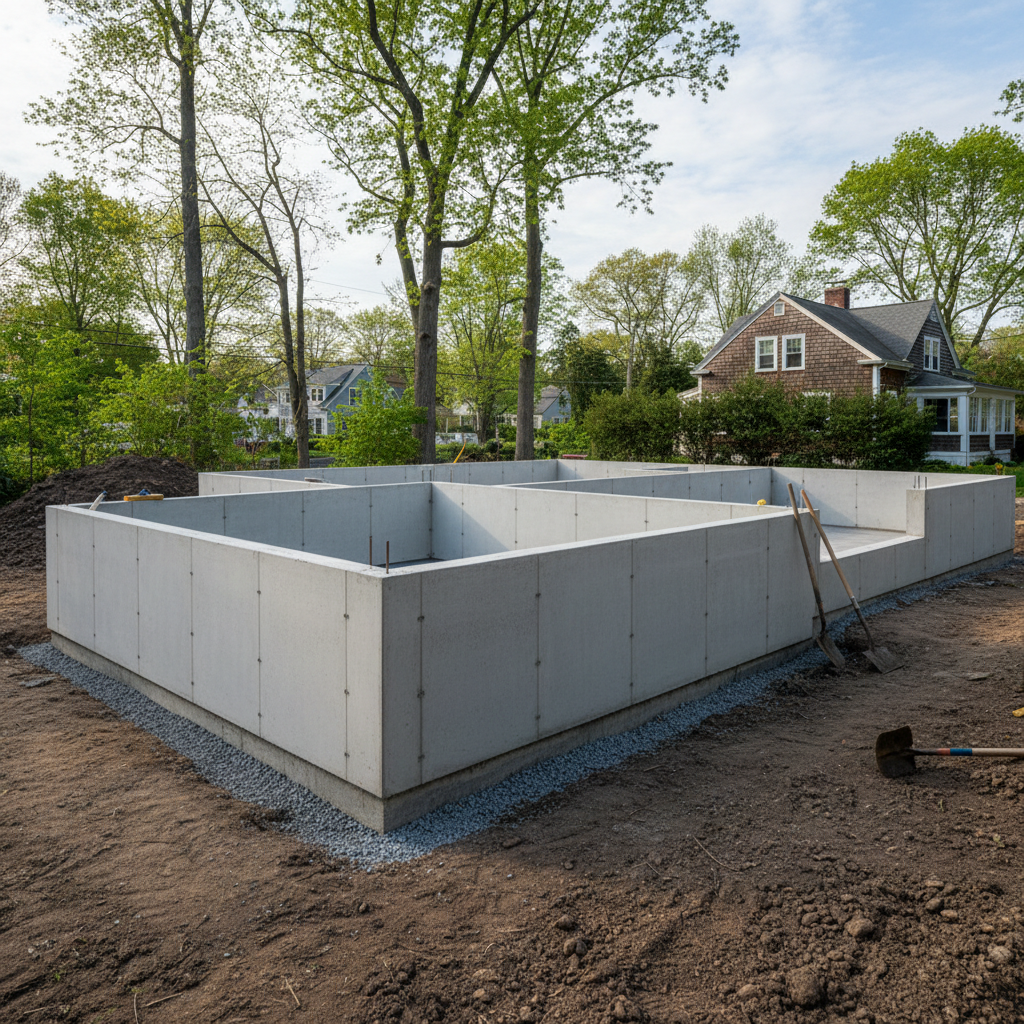
So, you're thinking about putting in a new concrete foundation, right? Maybe it's for a brand-new home or that addition you've been dreaming of. It's a big investment, and naturally, you want to know what it's going to cost. I totally get it. As someone who's poured a lot of concrete around Brookline, I can tell you there's no single, easy answer, but I can certainly break down what affects the price and give you some realistic numbers.
What Makes Foundation Prices Go Up or Down?
A concrete foundation isn't just some slab; it's a super important part of your home's structure. A lot goes into making sure it's done right, and several factors will definitely push the price either way.
- Size and Complexity: This one's pretty obvious. A bigger foundation means more concrete, more rebar, and more labor. But complexity really matters too. A simple rectangular slab is cheaper than a foundation with multiple offsets, varying depths, or integrated steps. And if you're building on a slope? That's a whole different ballgame for excavation and forming, believe me.
- Soil Conditions: This is a huge factor, especially in places like Brookline. We've got a real mix here, everything from solid ledge to soft, silty clay. If we hit rock, that means more time and specialized equipment for digging, which costs more. If the soil is weak, you might need deeper footings, more rebar, or even some specialized engineered fill — all adding to the bill. Often, we'll need a geotechnical report to understand what we're even dealing with before we dig a single shovel.
- Foundation Type: Are we talking about a full basement, a crawl space, or a slab-on-grade? A full basement foundation means deeper digging, taller walls, and more concrete, making it the most expensive choice. A crawl space is usually less, and a slab-on-grade is typically the least costly, assuming the soil is good.
- Accessibility: Can our trucks and excavators get to the site easily? If we're working on a tight lot in, say, the Coolidge Corner area with limited access, it's going to take more time and potentially smaller equipment. That definitely increases labor costs.
- Permits and Inspections: Don't forget these. Brookline has its own set of requirements, and getting the necessary permits and passing inspections is just part of the process. Your contractor should handle this, but the costs are passed on to you.
- Material Costs: The price of concrete, rebar, and gravel fluctuates. We try to lock in prices, but sometimes market changes can affect the final quote.
Typical Cost Ranges in Brookline, MA
Alright, let's talk numbers. These are general ranges for a standard residential foundation in our area. Just keep in mind, these are estimates, and your specific project could fall outside these figures.
- Slab-on-Grade Foundation: For a simple, unheated slab for an addition or garage, you're usually looking at around $7 - $12 per square foot. This includes excavation, gravel base, vapor barrier, rebar, concrete pour, and finishing. For a 500 sq ft addition, that's roughly $3,500 - $6,000.
- Crawl Space Foundation: These typically run $15 - $25 per square foot. This includes deeper excavation, footings, and short concrete walls. For a 1,000 sq ft footprint, you might be looking at $15,000 - $25,000.
- Full Basement Foundation: This is the big one. Expect to pay $30 - $50+ per square foot. This covers significant excavation, deep footings, tall concrete walls, waterproofing, and backfilling. For a 1,500 sq ft basement, you could be in the range of $45,000 - $75,000. Easily more if the ground is tricky or you need extensive drainage systems.
These numbers don't include things like interior concrete slabs for basements (which are extra), specialized waterproofing beyond standard, or extensive site work like tree removal or retaining walls. Just a heads up.
What's Included in a Good Quote?
When Neighborly Concrete Inc gives you a quote, we make sure it's clear. Here's what you should expect to see:
- Detailed Scope of Work: What exactly are we building? Dimensions, type of foundation, depth, etc.
- Excavation: Includes digging, hauling away excess soil, and preparing the sub-grade.
- Footings: Size, depth, and rebar reinforcement.
- Foundation Walls: Height, thickness, and reinforcement.
- Slab (if applicable): Thickness, vapor barrier, and rebar/mesh.
- Gravel Base: Type and depth of crushed stone.
- Formwork: Materials and labor for setting up and removing the forms.
- Concrete: Volume, strength (e.g., 4000 psi), and delivery.
- Rebar/Reinforcement: Type, size, and placement.
- Waterproofing/Damp-proofing: What's included (e.g., foundation coating, drain tile).
- Backfilling: Returning soil around the foundation.
- Cleanup: Site tidying after the work is done.
- Permit Assistance: Often, we'll handle the paperwork, but the fees are usually separate.
Make sure any quote you get is itemized. If it's just one big number, ask for a breakdown. You really need to know what you're paying for.
How to Avoid Overpaying
Nobody wants to get ripped off, especially on something as fundamental as a foundation. Here's my advice:
- Get Multiple Quotes: Don't just go with the first guy. Get at least three detailed quotes from reputable, licensed, and insured contractors. Compare them carefully, not just on price, but on what's actually included.
- Check References and Reviews: See what other homeowners in Brookline say about them. A good track record is invaluable.
- Understand the Scope: Make sure every contractor is quoting on the exact same scope of work. If one quote is significantly lower, it might be because they've left something out. Ask questions!
- Don't Be Afraid to Ask for Explanations: If something in the quote doesn't make sense, ask. A good contractor will be happy to explain.
- Be Wary of Lowball Offers: If a price seems too good to be true, it probably is. Cutting corners on a foundation is a recipe for disaster down the road.
- Consider Value, Not Just Price: A slightly higher quote from a really experienced, reputable contractor who uses quality materials and stands behind their work is often a better investment than the cheapest option.
A solid foundation is literally the base of your home. It's not the place to skimp. Do your homework, ask the right questions, and choose a contractor you trust. It'll save you a lot of headaches and money in the long run.